Czech street art has evolved from clandestine acts of rebellion to a celebrated cultural phenomenon that colors the urban landscape of cities like Prague, Brno, and Ostrava. Today, what began as graffiti—often painted under the cover of night—has become an integral part of Czech cultural identity, attracting artists, tourists, and locals alike. This journey tells a story of political expression, creative transformation, and community engagement. In this article, we’ll trace the historical roots of Czech street art, examine its diverse forms, explore its societal impact, and see how it competes and cooperates with other European street art movements.
Origins of Czech Street Art: From Underground Resistance to Urban Canvas
The roots of Czech street art are firmly planted in the political and social upheavals of the late 20th century. During the communist era (1948–1989), any form of unsanctioned public expression was strictly prohibited in Czechoslovakia. Graffiti became a rare but potent form of dissent. A landmark moment arrived in 1988 with the emergence of the Lennon Wall in Prague. Originally an ordinary wall near the French Embassy, it became an impromptu tribute to John Lennon and a symbol of peace and freedom, splashed with lyrics, messages, and political slogans. Despite repeated attempts by the authorities to whitewash it, the wall was constantly repainted by young Czechs, making it a living chronicle of resistance.
By the early 1990s, with the Velvet Revolution and the fall of communism, a wave of newfound freedom swept across the country. The walls of Prague, Brno, and other cities became canvases for self-expression, often shaped by the influences of Western graffiti and hip-hop culture. The transformation was rapid: where graffiti was once a dangerous act of defiance, it began to shift into an accepted—if sometimes controversial—form of urban art.
.png)
From Graffiti to Murals: The Changing Face of Czech Street Art
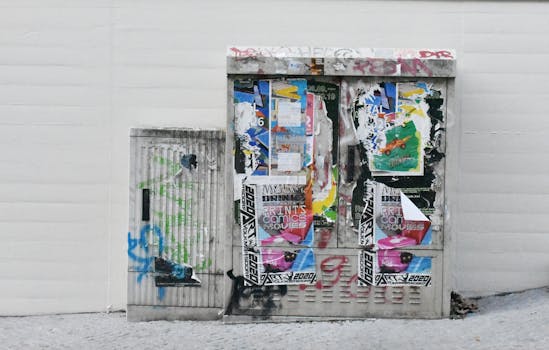
While early street art in the Czech Republic largely consisted of tags and spray-painted slogans, the past two decades have seen a remarkable evolution. Large-scale murals, stencils, wheat-paste posters, and installations have all become part of the country’s urban visual language.
Notable examples include the murals in Prague’s Žižkov and Holešovice districts, which mix surrealism, political commentary, and local folklore. In Brno, the underpasses and train stations are adorned with colorful, commissioned murals that brighten public spaces and discourage illegal tagging. Ostrava, a city with a strong industrial heritage, has turned former factory walls into open-air galleries.
The scope and ambition of Czech street art have also grown. In 2015, Prague hosted the “Město=Galerie” (City=Gallery) festival, which invited local and international artists to legally transform drab facades into vibrant works of art. According to a 2021 report by the Czech Street Art Foundation, over 350 legal murals have been created in Prague alone since 2010, marking a significant shift from clandestine graffiti to officially sanctioned public art.
Societal Impact: Street Art as Dialogue and Identity
Street art in the Czech Republic is more than decoration—it’s a form of urban dialogue. Murals and installations often reflect social issues, cultural identity, and historical memory. For example, the 2020 mural “Respect Diversity” in Prague’s Karlín district, celebrating multiculturalism, became a focal point during debates over migration and inclusion.
Academic studies, such as the 2018 survey by Charles University’s Department of Sociology, have found that over 65% of Prague residents view street art positively, considering it an important part of the city’s character. Younger generations, in particular, see it as both a creative outlet and a tool for social commentary.
Street art has also contributed to urban regeneration. Projects like the revitalization of the Nákladové nádraží Žižkov (Žižkov Freight Station) have attracted visitors and new businesses, boosting local economies. Tour companies now offer dedicated street art tours, with an estimated 40,000 tourists participating annually in Prague alone.
Legal vs. Illegal: Regulation, Rights, and Recognition
The relationship between street artists and the authorities has always been complex. In the 1990s and early 2000s, illegal graffiti was widely condemned and subject to harsh penalties. According to police statistics, over 4,000 graffiti-related offenses were recorded in Prague in 2003.
However, attitudes have softened as the artistic and economic value of street art has become more apparent. Today, many Czech cities have designated legal walls where artists can work freely. At the same time, unauthorized graffiti remains a contentious issue, with ongoing debates about vandalism versus art.
The following table provides a comparison of legal and illegal street art in the Czech Republic:
| Aspect | Legal Street Art | Illegal Graffiti |
|---|---|---|
| Permission | Granted by property owner or municipality | None; act is unauthorized |
| Common Locations | Designated walls, underpasses, public buildings | Trains, bridges, historical monuments, private property |
| Penalties | None (with permission) | Fines up to 50,000 CZK, possible criminal charges |
| Public Perception | Generally positive, viewed as art | Mixed; often seen as vandalism |
| Examples | “Město=Galerie” murals, Lennon Wall | Tagging on metro, unauthorized slogans |
This coexistence of legal and illegal street art has sparked creative tension but has also encouraged dialogue between artists, officials, and the public. Municipalities increasingly recognize the value of involving artists in urban planning to transform neglected spaces into assets.
Czech Street Art in the European Context: Unique Voices and Shared Trends
While Czech street art has its own distinct character, it also participates in broader European trends. Cities like Berlin, London, and Paris have long been recognized as street art capitals; Prague and Brno are increasingly part of this conversation.
Czech artists such as Pasta Oner, Point (Jan Kaláb), and Chemis have gained international recognition, exhibiting abroad and collaborating with global brands. Festivals like “Street Art Festival Olomouc” connect Czech artists with peers from countries including Germany, Poland, and Slovakia.
What sets Czech street art apart? A notable feature is its blending of political satire, surrealism, and references to local history. For instance, murals often incorporate Czech literary figures, folk motifs, or responses to national events. The interplay between tradition and innovation is a hallmark of the Czech scene, making it both relatable and original.
Moreover, Czech street art is highly adaptive. During the COVID-19 pandemic, artists responded quickly with murals honoring healthcare workers and memorializing victims. This responsiveness has further cemented street art’s role as a mirror and molder of public sentiment.
Technology, Social Media, and the Future of Czech Street Art
The digital era has revolutionized how street art is created, shared, and experienced in the Czech Republic. Social media platforms like Instagram and Facebook have become virtual galleries, allowing artists to reach global audiences in real time. The hashtag #czechstreetart has been used over 55,000 times on Instagram as of 2024, showcasing everything from massive murals to ephemeral stencils.
Technology has also facilitated new forms of expression. Augmented reality (AR) street art installations, such as those unveiled during the 2022 Signal Festival in Prague, combine physical and digital art to create interactive experiences for viewers. Apps now help tourists locate murals and learn about their creators, making street art more accessible and educational.
Looking ahead, experts predict that Czech street art will continue to diversify, incorporating new technologies and themes while maintaining its roots in social commentary and urban renewal. The growth of community-driven projects, collaborations with architects, and cross-border exchanges are likely to shape the next chapter of this vibrant movement.
The Ongoing Transformation of Czech Street Art
The story of Czech street art is one of transformation: from covert protest to celebrated public expression, from simple tags to monumental murals, from local activism to international acclaim. Today, Czech street art is a dynamic part of the country’s cultural landscape—a testament to resilience, creativity, and the power of dialogue between artists and the public.
As Czech cities continue to grow and change, street art will remain a vital force—sparking debate, beautifying neighborhoods, and fostering a sense of shared identity. Whether you’re a resident, visitor, or artist, the walls of Czech cities invite you to look closer and join the conversation.