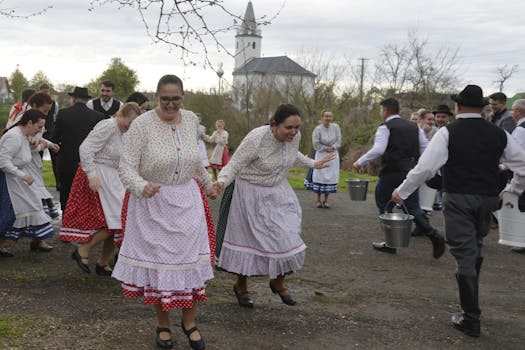
Czech folk dances are an essential part of the country's rich cultural tapestry, celebrated for their vibrant music, spirited choreography, and distinctive rhythms. While these traditional dances—such as the polka, furiant, and skočná—may conjure up images of rustic village festivities, their influence extends far beyond folklore festivals and heritage events. In recent decades, the sounds, structures, and spirit of Czech folk dances have found new life in contemporary popular music, weaving tradition into the modern musical landscape. This fascinating interplay connects the past with the present, demonstrating how cultural roots can inspire innovation and resonate with new generations.
The Roots: Understanding Czech Folk Dances
Any exploration of Czech folk dance influence must begin with a look at the roots. Czech folk dances have evolved over centuries, with many originating in rural communities as part of seasonal celebrations, weddings, and local gatherings. Three of the most iconic are the polka, furiant, and skočná:
- The polka, perhaps the most internationally recognized, originated in the early 19th century in Bohemia. Its quick 2/4 time signature and lively tempo quickly captivated Europe and the Americas. - The furiant is marked by shifting accents and rhythms, creating a playful, unpredictable feel. - The skočná is a rapid, jumping dance, featuring a 2/4 or 6/8 meter that energizes both dancers and audiences.According to the Czech Statistical Office, over 270 folk dances have been documented across the country, reflecting regional diversity and local flavor. While some of these dances remain relatively unchanged, others have evolved, blending with outside influences or adapting to contemporary tastes.
.png)
From Village Greens to Urban Beats: The Journey into Popular Music
The migration of Czech folk dances into popular music is not a recent phenomenon. In the late 19th and early 20th centuries, composers such as Bedřich Smetana and Antonín Dvořák incorporated folk dance themes into their classical compositions, helping to elevate local traditions to the concert stage. However, it was the wave of modern musical innovation in the late 20th century that began to blur the lines between tradition and popular culture.
In the 1960s, Czech beat and rock bands started experimenting with folk motifs. Groups like The Golden Kids and Olympic would occasionally weave polka rhythms or folk melodies into their arrangements, appealing to a sense of national identity amid global musical trends. The Velvet Revolution of 1989 unleashed a new wave of creativity, and artists became bolder in their fusions. Bands such as Čechomor and Traband achieved commercial success by blending folk instruments (violins, accordions, bagpipes) and dance rhythms with rock, pop, and even electronic elements.
Currently, according to the Czech Music Office, over 30% of new Czech pop and alternative albums contain identifiable folk dance or folk music influences, demonstrating a growing appetite for tradition-infused modernity.
Musical Techniques: How Folk Dance Elements Shape Modern Sound
The influence of Czech folk dances on contemporary music goes beyond simply quoting a melody or lyric. Musicians have adopted several specific techniques, including:
1. $1: Modern producers and bands frequently use the distinctive rhythmic patterns of dances like the polka (2/4) and furiant (alternating 2/4 and 3/4) to create infectious grooves. For example, indie pop band Lake Malawi’s 2022 single "Spinning" features a syncopated beat inspired by folk dance structures. 2. $1: Folk instruments—such as the cimbalom, fiddle, and clarinet—are increasingly found in pop, rock, and even electronic tracks. Čechomor’s album "Nadechnutí" (2018), which reached the top 5 on the Czech charts, is notable for its use of traditional instruments layered over modern production. 3. $1: Borrowing from folk dance tunes, contemporary songwriters often use pentatonic scales, modal harmonies, and ornamented melodies reminiscent of village music. This creates a sense of nostalgia and authenticity, even within a modern musical context. 4. $1: Many folk dances involve communal singing or instrumental dialogue, encouraging participation. Pop and rock songs sometimes mimic this by alternating verses and choruses, or by inviting audience interaction through refrains and handclaps.These techniques not only honor tradition but also provide a unique sonic identity that distinguishes Czech popular music on the global stage.
Case Studies: Artists Blending Tradition with Modernity
Several Czech artists exemplify the dynamic interplay between folk dance heritage and contemporary music:
- $1: This celebrated band, active since 1988, has built its success on modern arrangements of Moravian and Bohemian folk songs. Their 2001 album "Proměny" won the prestigious Anděl Award for Album of the Year and sold over 100,000 copies—a remarkable achievement for a folk-rooted band. - $1: Known for their alternative rock sound, they have incorporated skočná-inspired rhythms and folk elements in tracks like "Některé otázky už si prostě nekladu" (2014), bridging the gap between indie and folkloric traditions. - $1: A leading figure in Czech alternative music, Dusilová regularly collaborates with folk musicians and integrates furiant and polka patterns into her atmospheric pop songs. Her 2016 album "V hodině smrti" was lauded for its “bold weaving of folk and electronica.” - $1: This contemporary pop-folk band has scored multiple radio hits by fusing accessible melodies with traditional dance beats, appealing to both younger and older audiences.These artists, among others, exemplify how folk dance traditions can be reinterpreted to appeal to modern sensibilities while retaining their cultural significance.
Comparing Traditional and Contemporary Approaches: Key Differences and Similarities
To better understand the evolving relationship between Czech folk dances and popular music, it is helpful to compare their characteristics side by side:
| Aspect | Traditional Czech Folk Dance | Contemporary Popular Music Influence |
|---|---|---|
| Rhythm | Fixed, dance-specific meters (e.g., polka’s 2/4) | Adapted meters, often blended with pop/rock beats |
| Instrumentation | Acoustic (fiddle, cimbalom, accordion, clarinet) | Mix of traditional and electric/electronic instruments |
| Performance Context | Community gatherings, festivals, rituals | Concerts, radio, streaming platforms, music videos |
| Audience Participation | Active (dancing, singing, clapping) | Sometimes passive, but interactive elements persist |
| Lyrics | Folkloric themes: nature, love, work | Modern topics, but often allude to folk themes |
| Distribution | Local, oral tradition | National/international, digital media |
While the context and presentation may differ, the underlying spirit—a celebration of community, emotion, and rhythm—remains a common thread.
Impact on Czech Identity and Global Perception
The fusion of folk dance traditions with popular music has had a profound impact on Czech cultural identity. For many listeners, hearing a familiar polka rhythm or folk melody within a modern track evokes a sense of pride and continuity. According to a 2021 survey by Radiožurnál, 68% of Czech respondents said that music incorporating traditional elements made them feel "more connected to their national heritage."
Moreover, the international success of artists like Čechomor and the global popularity of the polka—now danced in countries as diverse as the United States, Sweden, and Japan—have helped promote a positive image of Czech culture abroad. The recognition of Czech folk music by UNESCO as an Intangible Cultural Heritage further underscores its global significance.
At the same time, the ongoing reinterpretation of folk dances ensures that these traditions remain relevant, not confined to museums or nostalgia. Young artists and producers continue to experiment, blending folk rhythms with hip-hop, electronic, and even jazz, ensuring that the heritage evolves alongside society.
Challenges and Opportunities: Preserving Authenticity in a Modern World
Despite these successes, the interplay between tradition and modernity is not without challenges. Purists sometimes worry that the blending of folk with popular genres may dilute or commercialize authentic cultural expressions. There is also the risk that overuse of folk motifs could devolve into cliché or lose meaning.
However, many experts argue that adaptation is key to survival. As ethnomusicologist Dr. Jana Štěpánková notes, "Tradition is not static. Every generation redefines what it means to be Czech, and music is one of the most powerful tools for that redefinition." She points out that active engagement—whether through innovative pop songs or traditional dance workshops—ensures that folk traditions remain living, breathing parts of Czech society.
New initiatives, such as the "Folklore Meets Pop" festival launched in Brno in 2019, support this synthesis by encouraging collaboration between folk ensembles and contemporary musicians. Over 10,000 attendees participated in the 2023 edition, highlighting growing public interest.
Honoring Heritage While Embracing Change: The Lasting Influence of Czech Folk Dances
The ongoing dialogue between Czech folk dances and contemporary popular music is a testament to the resilience and adaptability of cultural traditions. Far from fading into the background, these lively dances continue to inspire new generations of musicians, listeners, and dancers. Whether heard in a chart-topping pop song, a rock ballad, or a fusion festival, the rhythms and melodies of Czech folk dance remain vital threads in the fabric of modern Czech identity.
By embracing both preservation and innovation, Czech artists have ensured that their musical heritage is not only remembered but continually reborn—offering a model for other cultures seeking to balance tradition and modernity in a rapidly changing world.