The 21st century is widely regarded as the era of rapid technological transformation. From the rise of social media platforms and streaming services to the proliferation of artificial intelligence and virtual reality, technology now touches nearly every aspect of our daily lives. One of the most profound impacts of this digital revolution has been on the way we perceive, share, and participate in culture. Our cultural experiences are no longer bound by geography, language, or even time. Instead, technology enables us to access, remix, and redefine cultural narratives in unprecedented ways. But what does this mean for our understanding of culture itself? This article explores how technology is reshaping our perceptions of culture in the 21st century—an evolution marked by both promise and complexity.
The Globalization of Culture Through Digital Platforms
One of the most significant shifts brought about by technology is the globalization of culture. In the past, cultural experiences were largely localized. People grew up immersed in the customs, music, food, and media of their immediate surroundings, with limited exposure to outside influences. Today, thanks to high-speed internet and ubiquitous smartphones, anyone can access cultural content from nearly every corner of the globe.
Social media platforms like TikTok, Instagram, and YouTube have played central roles in this transformation. As of 2023, TikTok boasted over 1 billion active users worldwide, with 40% of its user base located outside China, its country of origin. Viral dance trends, memes, and challenges can now originate in one country and become global phenomena within days. Similarly, Netflix’s international expansion has led to non-English language shows such as "Squid Game" (South Korea) and "Money Heist" (Spain) dominating global popular culture—demonstrating that cultural products are no longer limited by language barriers.
.png)
This global interconnectedness has several effects. On one hand, it allows for unprecedented cross-cultural exchange, fostering empathy and understanding between diverse populations. On the other hand, it raises concerns about cultural homogenization, where dominant cultural expressions overshadow local traditions and identities.
Technology and the Democratization of Cultural Creation
Another seismic shift is the democratization of cultural creation. Before the internet, producing and sharing creative work required access to significant resources—publishing houses, record labels, or art galleries. Today, anyone with a smartphone and an internet connection can become a creator, reaching potentially millions of viewers.
For example, platforms like SoundCloud and Bandcamp have enabled independent musicians to bypass traditional gatekeepers and distribute their music directly to fans. In 2022, over 20 million individual creators shared music on SoundCloud, many of whom built international followings without a record deal. Similarly, self-publishing on Amazon’s Kindle Direct Publishing has allowed over 1 million authors to publish books without the backing of major publishing houses.
This democratization has led to a more diverse cultural landscape, as voices from marginalized or previously underrepresented communities find platforms to share their stories. However, it also brings challenges, such as content oversaturation and the difficulty of standing out in a crowded digital space.
Virtual Reality, Augmented Reality, and New Cultural Experiences
Emerging technologies like virtual reality (VR) and augmented reality (AR) are not just changing how we access culture—they’re transforming the very nature of cultural experience itself.
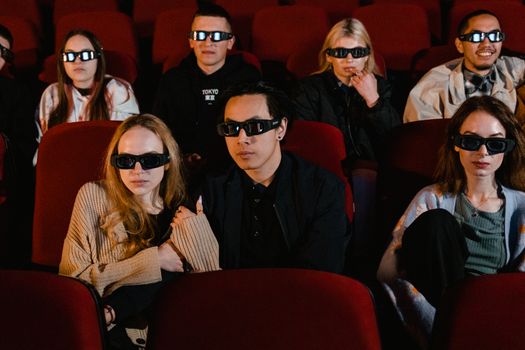
VR has enabled immersive museum tours, live concerts, and theatrical performances that transcend the limitations of physical space. The Louvre Museum in Paris, for instance, attracted over 1.2 million virtual visitors during the COVID-19 pandemic through its VR exhibitions. In the performing arts, the VR platform Wave has hosted virtual concerts featuring artists like The Weeknd and John Legend, with audiences from around the globe gathering in shared digital spaces.
AR, on the other hand, blends digital information with our physical environment. Apps like Pokémon GO (which saw over 500 million downloads in its first year) and Snapchat’s AR filters have shown how technology can turn everyday surroundings into canvases for cultural expression and play.
These technologies are not only expanding access to cultural experiences but also redefining the boundaries of what culture can be—making it interactive, participatory, and endlessly adaptable.
Algorithmic Influence and the Shaping of Cultural Perception
While technology opens up new cultural horizons, it also introduces new gatekeepers: algorithms. Streaming platforms, news aggregators, and social media feeds are driven by complex recommendation systems designed to keep users engaged. These algorithms influence what content we see, and as a result, can shape our cultural perceptions in subtle but powerful ways.
For example, a 2021 study by the Pew Research Center found that 53% of U.S. adults get their news from social media at least sometimes. Algorithms on platforms like Facebook and Twitter often prioritize sensational or emotionally charged content, which can create echo chambers and reinforce existing biases. Similarly, music and video streaming services like Spotify and YouTube use algorithms to serve up personalized playlists or video recommendations, which can limit exposure to new or diverse cultural content.
This dynamic is a double-edged sword. While algorithmic curation can help users discover niche interests and communities, it can also reinforce cultural silos and contribute to polarization.
Changing Patterns of Cultural Participation and Consumption
The ways in which we engage with culture have also evolved dramatically. In-person events—concerts, theater, museums—are increasingly complemented or even replaced by digital alternatives. According to a 2022 survey by Statista, 67% of global internet users reported streaming music, video, or live events online at least once per week.
Digital participation has some clear advantages: it lowers barriers to entry, making culture more accessible to people with disabilities, those in remote areas, or anyone unable to attend in person. For instance, the Metropolitan Opera in New York saw its digital audience grow from 300,000 to over 3.6 million during the COVID-19 pandemic by streaming performances online.
However, digital consumption can also change the nature of cultural engagement. Attention spans tend to be shorter online, and the experience of physically sharing space with others—a key aspect of communal culture—is often lost. The table below compares traditional and digital cultural participation:
| Aspect | Traditional Cultural Participation | Digital Cultural Participation |
|---|---|---|
| Accessibility | Limited by location, cost, physical ability | Broad, often global access; lowers many barriers |
| Interactivity | Typically passive (audience vs. performer) | Often interactive (comment, remix, share) |
| Social Experience | Shared physical space, direct interaction | Virtual communities, less personal |
| Content Diversity | Curated, often limited by organizers | Expansive, user-generated, algorithm-driven |
| Temporal Limitations | Event-based, fixed times | On-demand, anytime access |
Technology’s Role in Preserving and Evolving Cultural Heritage
While the focus is often on how technology is changing culture, it is also a powerful tool for preserving and evolving cultural heritage. Digital archives, 3D reconstructions, and online repositories are helping to safeguard traditions and artifacts at risk of being lost.
UNESCO estimates that over 60% of the world’s languages are endangered, with one language disappearing every two weeks. Digital documentation projects, such as the Endangered Languages Project, use online platforms to record and share endangered languages, helping to preserve them for future generations. Similarly, initiatives like Google Arts & Culture have digitized millions of artworks and artifacts from over 2,000 museums worldwide, making them accessible to anyone with an internet connection.
3D scanning and printing technologies also allow for the recreation of destroyed or deteriorating cultural sites. After the 2015 destruction of Palmyra’s ancient Arch of Triumph in Syria, researchers used digital scans and 3D printing to create a replica, which has since been exhibited in cities around the world.
These efforts highlight technology’s dual capacity: not only does it drive cultural change, but it also serves as a vital tool for cultural preservation and renewal.
The Future of Cultural Perception in a Hyperconnected World
As we look ahead, it’s clear that technology will continue to play an ever-greater role in shaping how we perceive and participate in culture. With the advent of artificial intelligence, the metaverse, and new forms of digital storytelling, the boundaries between creator and consumer, local and global, real and virtual, will continue to blur.
While these changes bring exciting opportunities for creativity and connection, they also raise important questions about authenticity, equity, and the very definition of culture itself. How can we leverage technology to celebrate diversity without erasing local identities? What responsibilities do platforms and algorithms have in curating cultural content? And how do we ensure that access to digital culture is inclusive and equitable?
Ultimately, the answer lies not in resisting technological change, but in using it thoughtfully—to expand our horizons, foster empathy, and keep the rich tapestry of human culture alive for generations to come.