Modern Visual Arts and Their Role in Czech Society: Innovation, Identity, and Influence
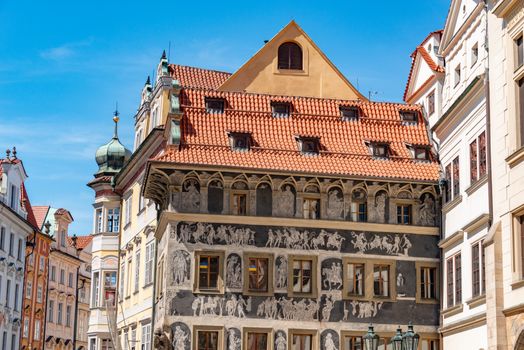
The Czech Republic has long been a fertile ground for artistic creativity, from the ornate architecture of Prague’s Old Town to the vibrant posters of the 20th-century avant-garde. In recent decades, however, it is modern visual arts—spanning painting, sculpture, photography, multimedia, and street art—that have come to both reflect and reshape Czech society. Far from being confined to galleries and museums, today’s Czech visual arts are everywhere: igniting public debate, fostering civic engagement, and serving as a dynamic lens through which national identity is continually reinterpreted.
This article explores the evolving landscape of modern visual arts in the Czech Republic, examining their societal roles, their intersection with technology, the emergence of new artistic spaces, and their impact on education and public life. Through facts, examples, and comparative data, we reveal how these creative expressions are helping to define what it means to be Czech in the 21st century.
The Changing Face of Czech Visual Arts
Modern visual arts in the Czech Republic have undergone profound transformation, especially since the Velvet Revolution of 1989. The fall of the communist regime not only lifted restrictions on artistic expression but also opened the door to global influences and experimental forms. According to the Czech Statistical Office, the number of registered visual artists in the country grew by over 40% between 1990 and 2020, reflecting both renewed freedom and increasing public interest.
.png)
Today, contemporary Czech artists like David Černý, Krištof Kintera, and Kateřina Šedá are internationally recognized for their provocative sculptures, installations, and participatory projects. Their works often tackle social themes—ranging from political satire to urban alienation—making art a potent force for commentary and change.
One striking example is Černý’s “Metalmorphosis,” a kinetic sculpture in Prague that both mesmerizes and challenges viewers with its constantly shifting form. Similarly, Šedá’s community-based interventions, such as “There Is Nothing There,” engage entire villages in creative acts, blurring the lines between artist and audience.
Visual Arts as a Catalyst for Civic Engagement
In the Czech Republic, modern visual arts do more than decorate—they provoke discussion and inspire action. Public art installations, murals, and performances have become common tools for raising awareness on issues such as corruption, environmental protection, and social justice.
For instance, in 2019, the “Lennon Wall” in Prague—once a symbol of anti-communist resistance—was repurposed by artists and activists to advocate for climate change action. This transformation turned a historical landmark into a living forum for contemporary debate, drawing tens of thousands of visitors each year.
A 2021 survey by the Czech Arts and Theatre Institute found that 68% of Czech adults believe that visual arts play a “significant role” in shaping public opinion and community values. This strong connection between artistic expression and civic life is evident in the popularity of art festivals such as Signal Festival, which attracts over 500,000 visitors annually and turns Prague’s streets into an open-air gallery of light installations and digital art.
Technology’s Impact: From Digital Art to Virtual Exhibitions
The digital revolution has radically expanded the possibilities for Czech visual artists. New media, including video art, interactive installations, and augmented reality, have become central to artistic practice and public engagement.
During the COVID-19 pandemic, when physical spaces were restricted, Czech galleries and artists quickly pivoted to online platforms. The National Gallery Prague launched virtual tours that drew over 200,000 online visitors in 2020 alone—a tenfold increase compared to pre-pandemic digital engagement. This shift not only preserved access to art but also democratized it, reaching audiences in rural regions and abroad.
Moreover, the rise of NFTs (non-fungible tokens) has begun to influence the Czech art market. In 2022, the country’s first major NFT exhibition at DOX Centre for Contemporary Art drew international attention, highlighting how Czech artists are embracing blockchain technology to reach collectors worldwide.
Emergence of New Artistic Spaces and Communities
Alongside traditional institutions such as the National Gallery and Museum of Decorative Arts, a vibrant ecosystem of artist-run spaces, collectives, and pop-up galleries is flourishing in the Czech Republic. These venues often prioritize experimental work, cross-disciplinary collaboration, and social engagement.
For example, Prague’s MeetFactory, founded by David Černý, combines studios, performance spaces, and community workshops under one roof, hosting over 150 events annually. Brno’s Industra Art has become a hub for media artists, facilitating workshops, residencies, and international exchanges.
To provide a clearer picture, here is a comparison table of major modern art spaces in the Czech Republic:
| Venue | Location | Focus | Annual Visitors (2023) | Unique Feature |
|---|---|---|---|---|
| National Gallery Prague | Prague | Modern & Contemporary Art | 550,000 | Permanent & international exhibitions |
| MeetFactory | Prague | Multidisciplinary Art | 60,000 | Artist residencies & experimental events |
| DOX Centre | Prague | Contemporary Art & Social Issues | 120,000 | Focus on social engagement & digital art |
| Industra Art | Brno | New Media Art | 15,000 | Workshops & artist collectives |
These diverse spaces have made modern visual art more accessible, particularly for young people and marginalized communities. According to the Czech Ministry of Culture, over 40% of visitors to these venues are under 35 years old—a testament to the sector’s youthful dynamism.
Visual Art in Education and Youth Culture
Modern visual arts are playing an increasingly important role in Czech education and youth initiatives. Art-based learning is now a core component of many primary and secondary school curricula, with government statistics showing that over 85% of schools include visual arts as part of their standard programs.
Outside formal education, youth-focused art projects such as “Art for Change” and “Young Artists for Europe” are empowering teenagers to address societal challenges through creative means. In 2023, more than 9,000 Czech students participated in visual arts competitions, with many works addressing themes such as environmentalism, migration, and diversity.
Moreover, social media platforms like Instagram and TikTok have become vital channels for young Czech artists to showcase their work and build communities. The hashtag #ceskyumeni (Czech art) has over 250,000 posts, highlighting the growing online presence and influence of the new generation.
Modern Visual Arts and Czech National Identity
Perhaps the most profound role that modern visual arts play in Czech society is their ongoing contribution to national identity. In a country shaped by centuries of shifting borders, political upheaval, and cultural exchange, visual art serves as both a mirror and a map—reflecting collective memories while charting new narratives.
Contemporary exhibitions frequently explore the tensions between tradition and innovation, local heritage and global trends. The 2022 exhibition “Memory of a Nation” at the National Gallery Prague, for example, brought together works from over 50 Czech artists to examine how art shapes and is shaped by historical experience.
According to a 2020 survey by STEM/MARK, 62% of Czechs agree that modern visual arts help to “express what it means to be Czech today.” This sentiment underscores the deep and evolving relationship between creative expression and cultural identity, as artists help society make sense of its past, present, and future.
Final Reflections: The Lasting Influence of Modern Visual Arts in Czech Society
Modern visual arts have emerged as a powerful force in the Czech Republic, informing everything from public debate to education, community building, and the negotiation of cultural identity. With over half a million annual visitors to contemporary art spaces and a growing number of young creators, visual arts continue to expand their reach and relevance.
As technology evolves and society changes, Czech artists are likely to remain at the forefront of innovation—challenging conventions, bridging divides, and illuminating the complexities of modern life. In this way, visual arts will undoubtedly continue to shape and inspire Czech society for generations to come.